
- This event has passed.
AI Clones and Creations
April 7, 2026 @ 4:00 pm - 5:00 pm
Annie Liang (Northwestern University)
E18-304
Event Navigation
Abstract: Modern AI systems are capable of generating synthetic representations of complex entities—from personalities to creative works—that can increasingly serve as plausible substitutes for the objects themselves. This talk examines the economic and regulatory implications of this shift via two papers.
The first, “Artificial Intelligence Clones,” analyzes search and matching when people are represented by AI “clones” rather than evaluated in person—for example, when an automated recruiter interviews AI clones of job candidates. AI representations greatly expand search capacity but introduce evaluation errors. Modeling individuals as points in a finite-dimensional Euclidean space and AI clones as noisy approximations, I show that when individuals are sufficiently high-dimensional, searching over even an arbitrarily large pool of AI clones performs worse than searching over just two people in person.
The second paper, “Creative Ownership in the Age of GenAI” (joint with Jay Lu), considers a regulatory perspective. Copyright law focuses on whether a new work is “substantially similar” to an existing one, but generative AI can closely imitate style without copying content, a capability now central to ongoing litigation. We argue that existing infringement definitions are ill-suited to this setting and propose a new criterion: a generative AI output infringes on an existing work if it could not have been generated without that work in the training data. Under this definition, we demonstrate a sharp asymptotic dichotomy: when innovations are light-tailed, dependence on individual works eventually vanishes, so that regulation imposes no limits on AI generation; with heavy-tailed innovations, regulation is persistently constraining.
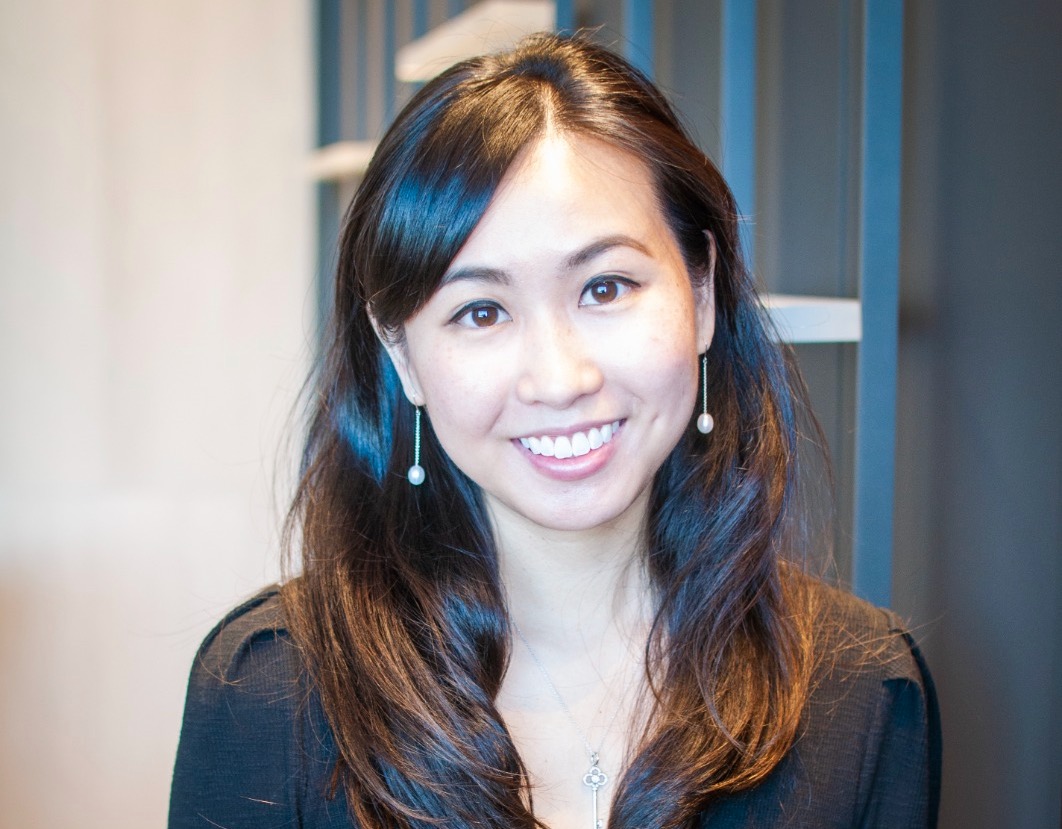
Bio: Annie Liang is an Associate Professor of Economics at Northwestern, with a courtesy appointment in Computer Science. She is an economic theorist whose research centers on three areas: (1) the social implications of AI and machine learning, (2) the use of machine-learning tools to improve economic modeling, and (3) dynamic information acquisition. Prior to joining Northwestern, she was an Assistant Professor of Economics at the University of Pennsylvania.
Annie received S.B. degrees in Mathematics and in Economics from MIT, and a Ph.D. in Economics from Harvard University. She is a recipient of an NSF CAREER award.

